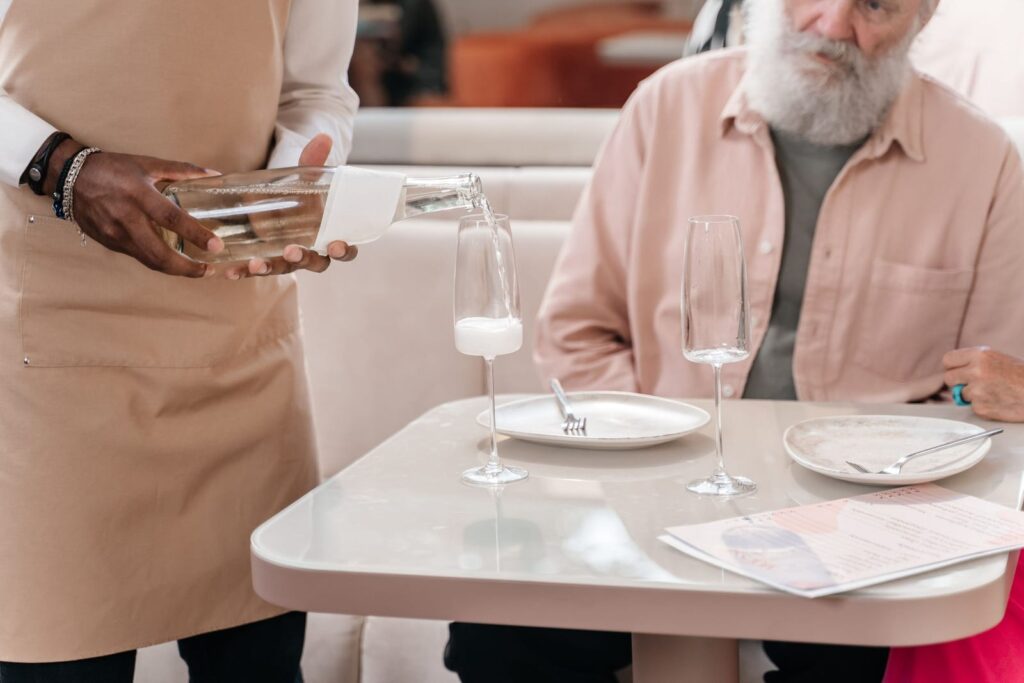
Few moments in travel are as quietly stressful as the one when the bill arrives. Should you tip? How much? Is service already included, and would adding more be generous or faintly insulting? The rules change dramatically from one country to the next, and what counts as polite in New York can be puzzling in Tokyo. This guide walks through restaurant tipping customs in some of the most visited countries, plus a few principles that will keep you on safe ground wherever you eat.
Why tipping customs differ so much
The biggest factor is how servers are paid. Where restaurant staff earn a full wage from their employer, tipping tends to be a small bonus for good service, or not expected at all. Where a large share of a server’s income is supposed to come from customers, tipping becomes close to mandatory. Culture plays a part too: in some countries a tip is seen as a thank you, in others it can suggest the staff need charity, or that the service was a transaction rather than hospitality.
A quick reference
| Country | Is a tip expected? | Typical amount at a sit-down restaurant |
|---|---|---|
| United States | Yes, strongly | 15 to 20% of the pre-tax bill |
| Canada | Yes | 15 to 20% |
| Mexico | Yes | 10 to 15% |
| United Kingdom | Usually, often as a service charge | 10 to 12.5%, unless already added |
| France | No, service is included | Small change or a few euros for good service |
| Italy | No | Round up; note the cover charge |
| Spain | No | Round up, or 5 to 10% for excellent service |
| Germany | Yes, modestly | Round up, around 5 to 10% |
| Japan | No | Nothing |
| South Korea | No | Nothing |
| Australia and New Zealand | No | Optional, around 10% for exceptional service |
North America
United States
The US has the strongest tipping culture in the world, and there is a structural reason for it. Under federal law, employers can pay tipped employees a cash wage as low as $2.13 an hour, as long as tips bring their total earnings up to the federal minimum wage. Many states set higher floors, but in much of the country tips are a core part of a server’s pay rather than a bonus.
For table service, 15% is the minimum for acceptable service, and 18 to 20% has become the norm in most cities. Tip on the pre-tax total. Check the bill before adding anything: many restaurants automatically add a gratuity for large groups, often six or more people. At bars, a dollar or two per drink is customary. Counter service and tablet prompts at coffee shops are more genuinely optional.
Canada
Canada is close to the US. Expect to leave 15 to 20% for sit-down meals. Card machines will usually offer preset percentages, and you can choose a custom amount.
Mexico
In Mexico, a tip (propina) of 10 to 15% is standard in restaurants. Look out for “propina incluida” on the bill, which means it has already been added. Tipping in pesos rather than dollars is appreciated, since servers do not have to exchange the money.
Europe
United Kingdom
In the UK, many restaurants, especially in London and other large cities, add a discretionary service charge to the bill, commonly 12.5%. It is optional by definition, and you can ask for it to be removed if the service was poor, but most diners pay it. If no service charge appears, leaving 10 to 12.5% is normal for table service. There is no need to tip on top of a service charge. Since 1 October 2024, the Employment (Allocation of Tips) Act 2023 has required employers to pass all tips and service charges on to workers without deductions, so the money goes to staff rather than the business.
In pubs, where you order at the bar, tipping is not expected. Offering to buy the bartender a drink (“and one for yourself”) is a traditional gesture, and they may add the price of a drink to your round.
France
French menu prices include service by law, which is why bills say “service compris.” Servers are paid a regular wage. You do not need to add anything, though it is common to leave a few coins or round up after a good meal, and a few euros at a nicer restaurant is a kind gesture.
Italy
Tipping is not a big part of Italian dining. What surprises visitors instead is the “coperto,” a per-person cover charge for bread and the table setting, which appears on many bills. Some restaurants, particularly in tourist areas, also add a “servizio” charge. If neither is present, rounding up or leaving a couple of euros is plenty.
Spain
In Spain, tipping is appreciated but not expected. Locals often leave small change after coffee or tapas. At a sit-down dinner with good service, 5 to 10% is generous.
Germany
Germans do tip, typically by rounding up to a convenient figure or adding around 5 to 10%. The etiquette is in the delivery: rather than leaving money on the table, tell the server the total you want to pay as you hand over cash or your card. Saying “stimmt so” means “keep the change.”
Asia
Japan
Japan is the classic no-tipping country. Excellent service is considered part of the job and part of the culture of hospitality, and leaving extra money can cause genuine confusion; staff may chase you down the street to return it. Some upscale restaurants and hotels add a service charge to the bill, which is all you need to pay. The best way to show appreciation is simply to say “gochisousama deshita” (“thank you for the meal”) as you leave. For more on dining customs in Japan, see our guide to the unwritten rules of ramen etiquette.
South Korea and China
Tipping is not customary in restaurants in South Korea or mainland China. As in Japan, some high-end hotels and restaurants catering to international guests include a service charge on the bill. Outside those settings, simply paying the bill is expected.
Oceania
Australia and New Zealand
Restaurant workers in Australia and New Zealand are covered by minimum wage laws with no lower tipped rate, so tipping is not expected. That said, it has become more common at higher-end restaurants in the big cities, where 10% for exceptional service is a welcome gesture rather than an obligation.
Rules that work everywhere
- Read the bill first. Look for words like service charge, servizio, service compris, propina incluida or gratuity before adding anything.
- Ask if you are not sure. A polite “is service included?” is never rude and saves you from paying twice.
- Carry a little local cash. Outside North America, many card machines have no tip option at all, so coins or a small note are the easiest way to leave something.
- Tip in the local currency. Foreign coins are hard to exchange and often worth nothing to the recipient.
- When in doubt, follow the locals. Watch what the people at the next table do, and do the same.
The bottom line
Tipping is less about arithmetic than about respect for how people are paid and how hospitality is understood in each place. In the US and Canada, a generous tip is part of the price of the meal. In much of Europe, a small round-up says thank you. In Japan and South Korea, a sincere word of thanks is worth more than any coin. Check the bill, know the local custom before you go, and your last moment at the table will be as pleasant as the meal itself.